
Open Letter to Kaja Kallas & Roberta Metsola
By Michael von der Schulenburg, Member of the European Parliament.
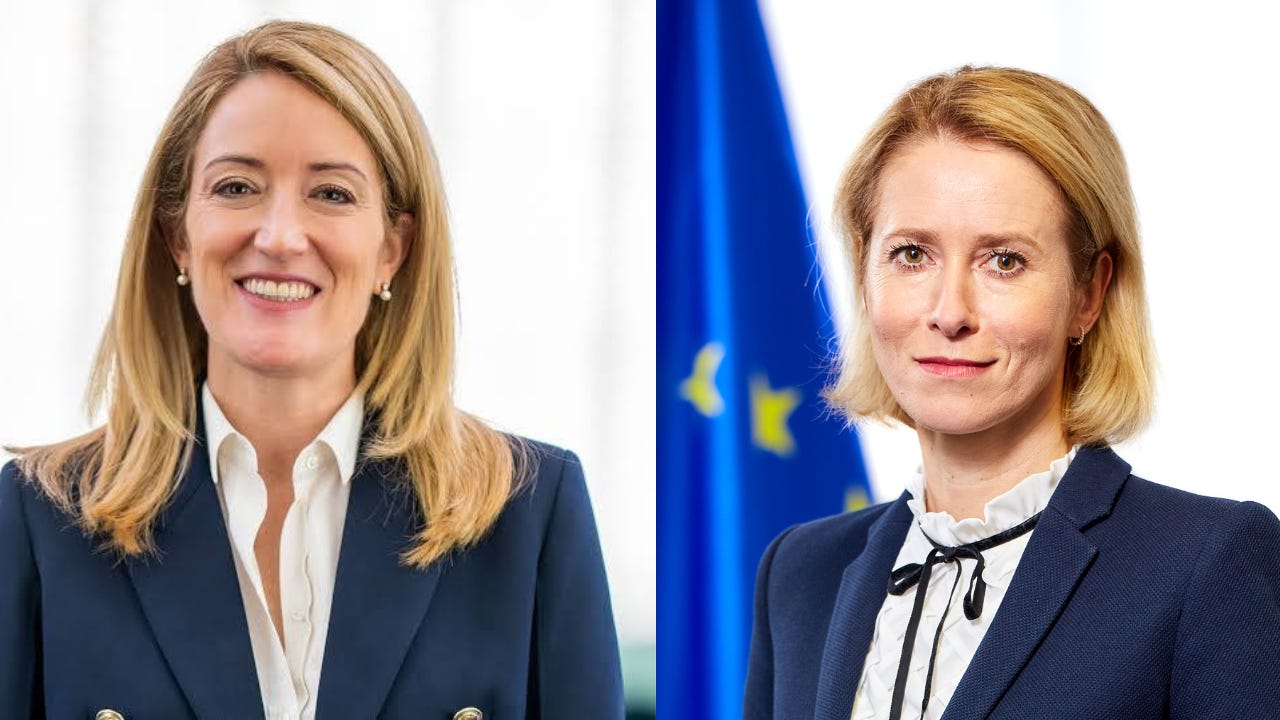
Note: On the sorrowful occasion of the fourth anniversary of the war in Ukraine, Michael von der Schulenburg MEP addressed Open Letters to Kaja Kallas, High Representative of the EU for Foreign Affairs, and to President of the European Parliament Roberta Metsola, calling for intra-European peace talks aimed at achieving a negotiated end to the war in Ukraine.
Letter to Kaja Kallas
At the sorrowful occasion of the fourth anniversary of the Ukraine war.
To: Ms. Kaja Kallas
High Representative of the European Union for Foreign Affairs and Security Policy and Vice‑President of the European Commission
Dear Ms. Kallas,
WE THE PEOPLE OF THE UNITED NATIONS (are) DETERMINED TO SAVE SUCCEEDING GENERATIONS FROM THE SCORGE OF WAR, WHICH TWICE IN OUR LIVEFTIME HAS BROUGHT UNTOLD SORROW TO MANKIND …
These are the opening words of the Charter of the United Nations. They were written in 1945, in the shadow of two devastating World Wars. For us Europeans, these words carry particular weight. Both World Wars began on our continent, and it was Europe’s peoples who suffered the greatest share of their destruction. We therefore bear a profound responsibility to ensure that such catastrophes never happen again.
On 24 February, the terrible war in Ukraine will enter its fifth year. It is the largest and by far the most dangerous conflict on European soil since 1945, and it carries the grave risk of engulfing the entire continent. As this war involves four nuclear powers, including the world’s two largest nuclear powers, any further escalation could get out of control and endanger humanity as a whole. Particularly worrying are the plans and rhetoric suggesting that the war should be continued indefinitely in the belief that this might one day produce a “victory”. What Europe needs is not victory through endless war, but the restoration of peace. That we Europeans have failed to prevent this war—and that after four years we have still not found a path to a peaceful settlement—should fill all parties to the conflict with deep shame.
Of the 750 million Europeans, 450 million live within the European Union. The Union therefore carries a special responsibility for peace on our continent. We must ask ourselves why we focused so much on arming the EU, while, at the same time, we neglected almost entirely any diplomatic efforts pursuing a peaceful solution. After four years of fighting, we have not even spoken to the other conflict party, Russia. Yet all EU member states, as well as Russia, have ratified the UN Charter and are therefore obliged “to take collective measures for the prevention and removal of threats to peace, and for the suppression of acts of aggression or other breaches of the peace, and to bring about by peaceful means, and in conformity with the principles of justice and international law, adjustment or settlement of international disputes or situations which might lead to a breach of the peace” (UN Charter, Chapter I, Article 1(1)).
After so much bitterness and hatred, it will require great courage from all sides to sit together and talk in pursuit of peace. But that is precisely what must now be done. I listened carefully to your remarks at the Munich Security Conference a few days ago, and I hope you will keep an open mind: this is a war on the European continent, and it will ultimately have to be resolved through diplomacy by Europeans.
In this context, I would like to draw your attention to a proposal for intra‑European peace talks aimed at achieving a negotiated end to the war in Ukraine. A group of eminent German personalities1 and I have drafted this proposal under the title “Ukraine and Russia: How this war can be ended with a negotiated peace.” A copy is attached.
The core idea of our proposal is to appeal to the shared responsibility of both the European Union and Russia for Ukraine as a European state and for the future peace and security of our continent. In this spirit, we propose that all sides agree in advance on three overarching objectives to guide future negotiations:
To secure the future of Ukraine as a sovereign, independent, and functional European state and, after four years of a devastating war, to restore hope for its people.
To lay the foundations for a pan‑European security and peace order that takes into account the legitimate security interests of both Ukraine and Russia, by building on existing international treaties such as the 1990 Charter of Paris for a New Europe.
On this basis, to identify possible solutions to the key issues that—given a corresponding willingness to compromise by all parties—could bring the war to an end.
Agreeing on such predetermined objectives could help break through the entrenched atmosphere of hostility and war rhetoric and place future negotiations on a more constructive footing. To elaborate on these ideas, General Kujat and I have written an article entitled “Europe now needs the courage to pursue peace – A call for peace on the fourth anniversary of the war in Ukraine.” A copy is attached.
General Kujat was once the highest-ranking officer of the Bundeswehr and former Chairman of the NATO-Russia Council and the NATO-Ukraine Commission of Chiefs of Defence. He has extensive knowledge and experience of Ukraine and Russia while working for Federal Chancellors Schmidt and Kohl as well as Head of the Military Policy Department and Head of the Planning Staff at the Federal Ministry of Defence.
As for myself, I draw on 34 years of living and working for the United Nations and shortly the OSCE in countries at war or affected by armed conflict around the world, including eight years as UN Assistant Secretary General reporting directly to the UN Security Council. Together, we bring extensive experience and insight relevant to addressing complex crises such as the war in Ukraine. If you consider it useful, we would be glad to meet with you and your colleagues to discuss our peace proposal in greater detail.
Pursuing peace requires not only knowledge—it requires, above all, courage. I wholeheartedly wish you this courage. The people of Europe, on whatever side of the front line they may find themselves, will be grateful.
With the assurances of my highest consideration,
Yours sincerely,
Michael von der Schulenburg
Letter to Roberta Metsola
At the sorrowful occasion of the fourth anniversary of the Ukraine war
To
Ms Roberta Metsola
President of the European Parliament
Dear Ms. Metsola,
WE THE PEOPLE OF THE UNITED NATIONS (are) DETERMINED TO SAVE SUCCEEDING GENERATIONS FROM THE SCORGE OF WAR, WHICH TWICE IN OUR LIVEFTIME HAS BROUGHT UNTOLD SORROW TO MANKIND …
These are the opening words of the Charter of the United Nations. They were written in 1945, in the shadow of two devastating World Wars. For us Europeans, these words carry particular weight. Both World Wars began on our continent, and it was Europe’s peoples who suffered the greatest share of their destruction. We therefore bear a profound responsibility to ensure that such catastrophes never happen again.
On 24 February, the terrible war in Ukraine will enter its fifth year. It is the largest and by far the most dangerous conflict on European soil since 1945, and it carries the grave risk of engulfing the entire continent. As this war involves four nuclear powers, including the world’s two largest nuclear powers, any further escalation could get out of control and endanger humanity as a whole. Particularly worrying are the plans and rhetoric suggesting that the war should be continued indefinitely in the belief that this might one day produce a “victory”. What Europe needs is not victory through endless war, but the restoration of peace. That we Europeans have failed to prevent this war—and that after four years we have still not found a path to a peaceful settlement—should fill all parties to the conflict with deep shame.
Of the 750 million Europeans, 450 million live within the European Union. The Union therefore carries a special responsibility for peace on our continent. We must ask ourselves why we did place our focus almost entirely on arming the EU while we have done so little to pursue a peaceful solution. After four years of fighting, we have not even spoken to the other conflict party, Russia. Yet all EU member states, as well as Russia, have ratified the UN Charter and are therefore obliged “to take collective measures for the prevention and removal of threats to peace, and for the suppression of acts of aggression or other breaches of the peace, and to bring about by peaceful means, and in conformity with the principles of justice and international law, adjustment or settlement of international disputes or situations which might lead to a breach of the peace” (UN Charter, Chapter I, Article 1(1)).
I am convinced that the European Parliament, representing people in 27 Member States, carries a particular responsibility to seek peaceful solutions to armed conflicts that impact or threaten our citizens. Unfortunately, the many resolutions adopted in support of Ukraine focus almost exclusively on military measures and fail to consider diplomatic avenues. This approach is not in line with the UN Charter. Moreover, there are currently no contacts—neither direct nor indirect, not even through the United Nations—with Russia. In all the wars I have encountered during my professional life, such a situation has never existed. There was always at least a small window kept open, if only to prevent the worst.
Despite the ongoing hostilities, I am convinced that it would be wise for this Parliament to reach out to Russia. After all, Russia is part of Europe and will remain our large neighbour.
In this context, I would like to draw your attention to a proposal for intra‑European peace talks aimed at achieving a negotiated end to the war in Ukraine. A group of eminent German personalities2 and I have drafted this proposal under the title “Ukraine and Russia: How this war can be ended with a negotiated peace.” A copy is attached.
The core idea of our proposal is to appeal to the shared responsibility of both the European Union and Russia for Ukraine as a European state and for the future peace and security of our continent. In this spirit, we propose that all sides agree in advance on three overarching objectives to guide future negotiations:
To secure the future of Ukraine as a sovereign, independent, and functional European state and, after four years of a devastating war, to restore hope for its people.
To lay the foundations for a pan‑European security and peace order that takes into account the legitimate security interests of both Ukraine and Russia, by building on existing international treaties such as the 1990 Charter of Paris for a New Europe.
On this basis, to identify possible solutions to the key issues that—given a corresponding willingness to compromise by all parties—could bring the war to an end.
Agreeing on such predetermined objectives could help break through the entrenched atmosphere of hostility and war rhetoric and place future negotiations on a more constructive footing. To elaborate on these ideas, General Kujat and I have written an article entitled “Europe now needs the courage to pursue peace – A call for peace on the fourth anniversary of the war in Ukraine.” A copy is attached.
General Kujat was once the highest-ranking officer of the Bundeswehr and former Chairman of the NATO-Russia Council and the NATO-Ukraine Commission of Chiefs of Defence. He has extensive knowledge and experience of Ukraine and Russia while working for Federal Chancellors Schmidt and Kohl as well as Head of the Military Policy Department and Head of the Planning Staff at the Federal Ministry of Defence.
As for myself, I draw on 34 years of living and working for the United Nations and shortly the OSCE in countries at war or affected by armed conflict around the world, including eight years as UN Assistant Secretary General reporting directly to the UN Security Council. Together, we bring extensive experience and insight relevant to addressing complex crises such as the war in Ukraine. If you consider it useful, we would be glad to meet with you and your colleagues or at any of the Commissions to discuss our peace proposal in greater detail.
Pursuing peace requires not only knowledge—it requires, above all, courage. I wholeheartedly wish you this courage. The people of Europe, on whatever side of the front line they may find themselves, will be grateful.
With the assurances of my highest consideration,
Yours sincerely,
Michael von der Schulenburg
The group includes Harald Kujat once the highest-ranking German general, Hort Teltschik (CDU) once the foreign policy advisor to former Chancellor Helmut Kohl at the time of reunification, Peter Brandt (SPD) a political scientist and the son of former Chancellor Willy Brandt at the time of Ostpolitik, Hajo Funke (Greens) an influential political scientist, Johannis Klotz is a well-known journalist, and me, formerly an Assistant Secretary-General of the UN with 34 years of experience in countries with or affected by wars und armed conflicts.
The group includes Harald Kujat once the highest-ranking German general, Hort Teltschik (CDU) once the foreign policy advisor to former Chancellor Helmut Kohl at the time of reunification, Peter Brandt (SPD) a political scientist and the son of former Chancellor Willy Brandt at the time of Ostpolitik, Hajo Funke (Greens) an influential political scientist, Johannis Klotz is a well-known journalist, and me, formerly an Assistant Secretary-General of the UN with 34 years of experience in countries with or affected by wars und armed conflicts.